
A single scratched or tagged window can disrupt a storefront or home, but replacing the glass isn’t always the first step. Anti graffiti film installation adds a protective layer over suitable glass to help shield the surface from marks and scratches. If the film is damaged, it may be removed and replaced while the glass beneath remains intact.
Before adding film to visible windows, consider what it can protect against, where it should go, and how to care for it. The right solution depends on the glass, its exposure, and how the property is maintained. Film can help protect glass, but it isn’t a guarantee against every type of damage.
This guide explains how anti-graffiti film works, what professional installation involves, and how routine care helps keep protected surfaces looking clear. You’ll also learn how to assess placement for commercial and suitable residential glass across San Diego County. Mr Tint installs anti-graffiti and anti-vandalism film for local property owners looking to protect exposed glass.
Key Takeaways
- Anti-graffiti film creates a protective layer over suitable glass, but it doesn’t make the glass damage-proof.
- Choose placement by considering the glass surface, exposure, access, visibility, and maintenance needs.
- Anti graffiti film installation typically involves assessing the glass, preparing the surface, applying the film, and reviewing care instructions.
- Storefronts, offices, shared spaces, and suitable home windows can each benefit from a plan tailored to their exposure.
- Mr Tint installs anti-graffiti and anti-vandalism film for residential and commercial properties across San Diego County.
What Anti-Graffiti Film Installation Protects, and Why Glass Needs It
Graffiti, scratches, and recurring surface marks can quickly affect the appearance of exposed glass. A marked entry panel at a San Diego storefront may be visible to customers all day. At an office or home, damaged-looking glass can become a repeated maintenance concern. Anti graffiti film installation adds a protective layer to suitable surfaces, helping property owners address recurring exposure before every new mark becomes a glass repair issue.
Anti-graffiti film is a transparent protective layer applied to suitable glass surfaces to help shield them from graffiti and surface damage. It serves as a sacrificial surface: if the film is marked, it may be removed and replaced instead of treating the glass itself as the protective layer. It doesn’t make glass damage-proof or prevent every scratch, impact, or form of vandalism. The broader Window film category includes protection from graffiti among its uses.
Which glass surfaces may benefit from anti-graffiti film?
Start with glass that people can reach or readily see. Storefront glazing, entry doors, and other exposed commercial glass are common examples. Mirrors and suitable residential glass may also be considered, depending on the project. Assess each area based on its location, exposure, and surface. A pane facing a public walkway presents a different concern from glass in a private interior space, so not every window needs the same approach.
When does protective film make sense for a property?
Recurring tagging, repeated surface marks, or the effort involved in cleaning exposed glass can signal that preventative protection is worth considering. Property managers can note which panels are affected and how often they need attention. Film is intended to protect a surface before further damage occurs, not repair glass that’s already cracked or otherwise damaged. Address existing damage separately, then consider whether nearby intact glass would benefit from protection.
To narrow the decision, identify exposed panes, consider how accessible they are, and weigh the visibility of marks against the upkeep they create. The goal isn’t to cover every piece of glass. It’s to focus on locations where recurring marks cause the most disruption at commercial properties and suitable homes across San Diego County.
How Anti-Graffiti Film Works on Glass: Placement, Protection, and Limits
Anti-graffiti film creates a protective surface over glass that may take the marks from tagging, scratching, or other surface contact instead of the glass itself. That can help where exposed glazing is a recurring maintenance concern. The issue also carries broader cleanup costs: Arizona State University cites an estimated $12 billion a year in graffiti cleanup costs in the United States.
Think of the film as a layer designed to protect the glass surface, not as a shield against every kind of damage. Placement matters. The film needs to suit the glass, how the area is accessed, and where marks are most likely. Professional anti graffiti film installation considers those conditions rather than applying one rule to every window.
Should anti-graffiti film go on the inside or outside of glass?
Start with the exposure. If tagging or surface marking happens on the outward-facing side, exterior placement may be relevant. Interior placement may suit other project conditions, including how the glass is accessed. Neither side is automatically best for every property. Glass type, access, installation conditions, and the location of the recurring problem all inform the decision. A ground-level storefront and a protected interior window call for different assessments.
What anti-graffiti film can, and cannot, do
The film is intended to help protect the underlying glass surface from marks and damage. If the film itself is affected, it may be possible to remove and replace it, but results depend on the specific film and glass. Film doesn’t guarantee protection from every scratch, impact, vandalism attempt, or cleaning-related issue. It also doesn’t make an unsuitable or already damaged pane suitable for protection.
Anti-graffiti film protects a glass surface from surface marking; it isn’t a substitute for glass-breakage protection. That distinction matters. A property owner concerned about forced entry, broken glass, or injury has a separate protection need. Anti-graffiti film shouldn’t be assumed to perform the same role as safety and security film. Match the solution to the risk, keeping surface protection and glass-breakage concerns distinct.
For property owners weighing those goals, Mr Tint’s anti-graffiti film installation can be part of a tailored glass-protection plan for residential and commercial properties across San Diego County.
Choosing Anti-Graffiti Film for a Storefront, Office, or Home
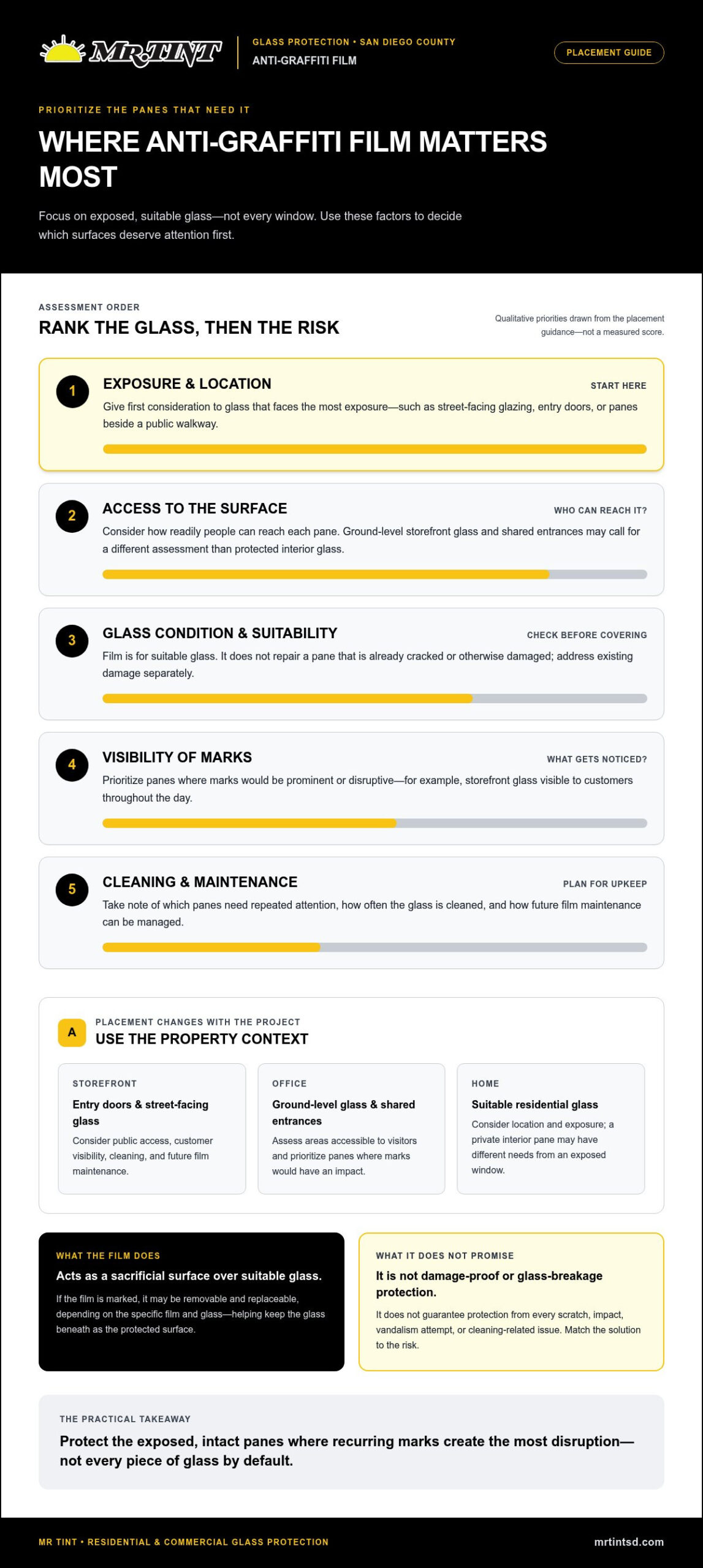
Start with the glass that faces the most exposure, rather than a one-size-fits-all setup. Consider who can reach each surface, how visible marks would be, and how the glass is cleaned and maintained. This helps focus anti graffiti film installation on panes where surface protection matters most.
| Property type | Exposure and access | Visibility and maintenance considerations |
|---|---|---|
| Storefront | Entry doors and street-facing glazing may have frequent public access. | Marks can be prominent to customers; consider how often the glass is cleaned and how future film maintenance can be managed. |
| Office | Assess ground-level glazing, shared entrances, and areas accessible to visitors. | Prioritize panes where marks would affect the professional appearance or create recurring upkeep. |
| Shared space | Lobby glass, common-area mirrors, and other frequently accessed surfaces may need closer consideration. | Account for regular contact, cleaning routines, and access for maintenance. |
| Suitable home application | Consider glass or mirrors in exposed locations, based on the home’s layout and access. | Balance protection goals with the desired appearance and routine care. |
Which property factors should shape the film plan?
Walk the property and note which surfaces face public access, repeated contact, or recurring marks. Then consider the cleaning routine, the appearance you want to preserve, and whether installers can access the glass for application and future maintenance. An exposed storefront entry may call for a different project scope from protected interior office glass. Let the property’s actual use and exposure guide the plan.
Anti-graffiti film versus safety, security, and decorative film
These film categories serve different purposes. Anti-graffiti film is intended to protect the glass surface from marking and abrasion. Safety and security film addresses a separate concern involving glass breakage. Decorative film changes or enhances the appearance of glass. Don’t assume one category provides every benefit. If the project also involves broader building-film goals, explore the commercial building window tinting guide; for other residential window-film priorities, see the residential window tinting guide.
Mr Tint installs anti-graffiti and anti-vandalism film for residential and commercial properties across San Diego County. Consider the property’s exposure, access to the glass, visual needs, and maintenance routine to keep the protection goal clear.
What to Expect During Anti-Graffiti Film Installation and Aftercare
A successful anti graffiti film installation starts with assessing the glass, access, and areas needing protection. Preparation matters: clean glass helps the film sit smoothly against the surface, while dirt or residue can affect the finished appearance.
How does professional installation typically proceed?
The process generally follows four steps, tailored to the property:
- Assess the glass. Review the glass condition, selected surfaces, and access to each pane. This helps identify project-specific considerations before work begins.
- Prepare the surface. Clean the glass and prepare it for film application. Careful preparation supports a clear, even finish.
- Apply the film. Position and install the film with attention to alignment and glass edges. The number and location of panes, access, and preparation needs shape the installation plan.
- Review the result. Look over the appearance and receive care instructions for the film used on the project.
There’s no single timeline for every property. A few accessible panes and a larger area with challenging access may require different plans. The scope depends on the glass and site conditions.
How should newly installed film be cared for?
Follow the film-specific cleaning and care instructions provided after installation. Directions for when and how to clean the glass can vary by film and project. Don’t assume your usual window-cleaning routine is appropriate immediately after installation.
Some newly installed film may show temporary moisture-related appearance changes, such as haze or small bubbles, as it dries. Their appearance and timing can vary with the film and installation conditions. Don’t judge the final appearance too early or try to press, lift, or adjust the film yourself. Follow the care guidance provided and allow the film to dry as directed.
A clear handoff matters. Make sure you understand the care instructions and which surfaces were treated, especially in commercial spaces where multiple people may clean the glass. Mr Tint installs anti-graffiti and anti-vandalism film for residential and commercial properties across San Diego County. Schedule anti-graffiti film installation to plan protection around your glass and site conditions.
Book Anti-Graffiti Film Installation with Mr Tint in San Diego County
Start with a simple property check. Identify the glass most exposed to public access or recurring marks, define what you want the film to help protect against, and consider how treated surfaces will be cleaned and maintained. Anti-graffiti film is a protective measure, not a promise that glass will be free from every kind of damage. A focused plan matches the work to the property instead of applying the same approach everywhere.
Is anti-graffiti film right for your property?
Look at each pane in context. A street-facing storefront, a shared building entry, and a window at home can have different levels of exposure and access. Consider where marks have occurred, which surfaces are most visible, and how much upkeep they create. Make a list of the glass or mirrors you want to protect. That gives the installation plan a clear starting point and helps keep expectations realistic.
Placement and the glass surface matter. Film can help protect suitable glass from surface marking, but it doesn’t prevent all scratches, impacts, or vandalism. If your goal is to protect exposed glazing from recurring surface damage, anti graffiti film installation may fit your property protection plan.
Plan a local anti-graffiti film installation
Mr Tint installs anti-graffiti and anti-vandalism film for residential and commercial properties throughout San Diego County, including San Diego, Escondido, Vista, Carlsbad, San Marcos, Oceanside, Encinitas, Rancho Santa Fe, Fallbrook, and Poway. The project can be planned around the glass you’ve identified, its exposure, and your property’s protection goals.
Before getting started, note which panes need attention and any access or maintenance considerations that could shape the project. Clear priorities help plan a practical solution for a home, storefront, office, or shared space. Request anti-graffiti film installation information from Mr Tint.
Protect Exposed Glass with a Plan That Fits
The right protection starts with the glass most exposed to tagging, scratches, or repeated contact. Anti-graffiti film creates a surface layer to help protect suitable glass, but it doesn’t make windows immune to every kind of damage. Placement should reflect the glass, its location, and the property’s maintenance needs.
Professional anti graffiti film installation involves more than applying film. Glass condition and access shape the work plan, while film-specific care instructions guide aftercare. These details matter for storefronts, offices, shared spaces, and suitable residential applications.
Mr Tint installs anti-graffiti and anti-vandalism film for residential and commercial properties across San Diego County. Identify the surfaces you want to protect, then take the next step with a local team. Plan your anti-graffiti film installation with Mr Tint.
Frequently Asked Questions
Can anti-graffiti film be installed on the inside or outside of glass?
Yes, anti-graffiti film may be installed on the inside or outside, depending on the project. Exposure to tagging can help guide placement, but it isn’t the only factor. Glass type, access to the surface, and installation conditions also matter. A street-facing pane may need a different plan from glass in a protected area. A professional assessment helps match placement to the glass and its exposure.
Does anti-graffiti film prevent glass from breaking?
No, anti-graffiti film is designed to protect the glass surface from marking and scratching, not to prevent breakage. It shouldn’t be treated as a substitute for safety or security film. If your concern includes broken glass, forced entry, or injury, that’s a separate protection goal. Identify the risk you want to address so the film choice fits the purpose, rather than assuming one film type provides every kind of protection.
Can graffiti or scratches be removed from anti-graffiti film?
Sometimes affected film can be removed and replaced, but whether marks can be cleaned off depends on the film and the damage. Don’t assume every scratch, tag, or etching can be safely removed. Follow the care guidance provided for the installation, and avoid aggressive cleaning or scraping unless the instructions specifically allow it. The film is intended to protect the glass beneath, not make its own surface immune to damage.
How long does anti-graffiti film installation take?
Installation time varies with the project, so there isn’t one reliable duration for every property. The number and size of glass surfaces, their condition, access, and preparation needs can all affect the plan. A few easy-to-reach panes may involve different work from multiple surfaces in a shared or commercial space. Mr Tint plans anti graffiti film installation around the property and the glass selected for protection.
Are bubbles normal after anti-graffiti film installation?
Temporary moisture-related haze or small bubbles may appear after installation as the film dries. Their appearance and timing can vary with the film and installation conditions, so follow the care instructions provided for your project. Don’t press, lift, or try to adjust the film yourself. If you’re unsure whether a visible area is part of the drying process, use the installation-specific guidance rather than relying on a general timeline.
How should I clean glass after anti-graffiti film is installed?
Follow the film-specific cleaning and care instructions provided after installation. Guidance can vary, so don’t assume your usual cleaning tools or products are suitable immediately. Keep the instructions available for anyone responsible for cleaning the glass, particularly at a business or shared property. Avoid scraping or using harsh cleaning methods unless the film guidance permits them. Film-appropriate maintenance helps care for the treated surface.
Does Mr Tint install anti-graffiti film in San Diego County?
Yes. Mr Tint installs anti-graffiti and anti-vandalism film for residential and commercial properties across San Diego County, including San Diego, Escondido, Vista, Carlsbad, San Marcos, Oceanside, Encinitas, Rancho Santa Fe, Fallbrook, and Poway. The installation plan can be shaped around the exposed glass and your protection goals. Contact Mr Tint to plan your anti-graffiti film installation.