
What if the paint chips you’re trying to avoid come from the everyday moment your door swings open beside a wall or another car? The painted edge can take a direct knock, and a poorly fitted protector may stand out instead of blending in. Car door edge guard film installation adds a protective layer where contact is most likely, but fit and careful application matter.
If you’re unsure how the film is installed, how it looks afterward, or how it compares with rubber or plastic trim, you’re not alone. This guide explains what edge protection film does, where it goes, and what to expect from professional installation in San Diego County. You’ll also learn how clear film compares with other protectors and what to consider for your vehicle. Mr Tint provides paint protection film installation using digitally cut film for precise coverage around vehicle contours. Here’s how the process works and how to choose an approach that suits your priorities.
Key Takeaways
- Door edge film covers painted areas that can get scuffed or chipped when a door contacts nearby objects, but it doesn’t protect every part of the vehicle.
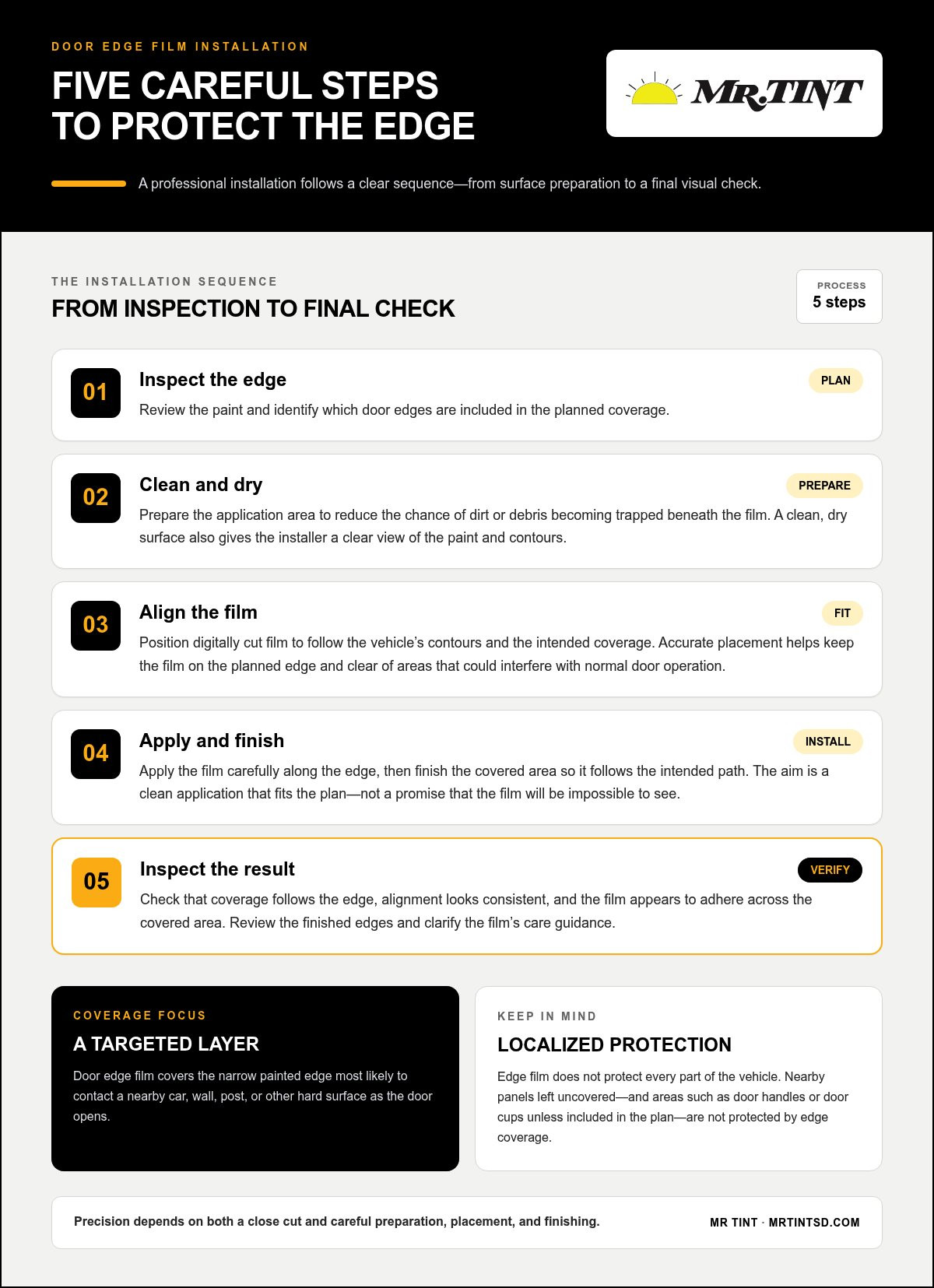
- Professional car door edge guard film installation follows a careful sequence: inspect, clean, align, apply, finish, and check the protected edges.
- Compare film with clip-on or adhesive guards by coverage, vehicle-specific fit, visibility, and maintenance to find the right match for your priorities.
- Before installation, note where your vehicle is most exposed to contact. Afterward, review the coverage and follow the care instructions for the film.
- Mr Tint’s certified PPF installation and digitally cut film support precise coverage shaped to vehicle contours.
What car door edge guard film protects, and what it does not
A door edge is a small area with a lot of exposure. It can meet a neighboring car, garage wall, post, or other hard surface as the door opens. That contact may scuff or chip the paint, especially where there’s little room to maneuver. Door edge guard film is applied over the painted edge to help protect the area most likely to make contact.
Think of this as targeted protection, not an all-around shield. Film can help protect the covered paint from everyday contact, but it can’t prevent every chip, scratch, dent, or other type of damage. Its protection depends on where it’s applied and what the door encounters. Nearby panels that remain uncovered are not protected by edge film.
Where door edge protection film goes
The primary coverage area is the narrow painted edge of the door, which can strike an object as the door swings open. The exact coverage follows the vehicle’s shape and the selected installation pattern. It may focus on the exposed edge rather than extending across the door’s broad outer surface.
That distinction matters. Door edge coverage is localized, while broader paint protection film coverage can extend over selected body panels. Digitally cut film supports a precise fit around vehicle contours, but the coverage area still depends on the installation plan. Don’t assume edge film also covers door handles, door cups, or the rest of the side panel.
Film protection versus a complete paint protection solution
Localized film addresses a specific contact point. It isn’t a complete paint protection solution for the vehicle. If you often park in narrow spaces, consider which edges face the greatest risk. If you’re also concerned about exposed body panels, assess those areas separately based on how and where you drive and park.
For example, a driver who often parks beside a wall may prioritize the door edge, while someone concerned about broader panel exposure may consider wider coverage. Choose each area deliberately. The San Diego paint protection film buying guide can help you compare coverage options beyond the door edge. For a general overview of the material, see Paint Protection Film (PPF).
For drivers in San Diego, Escondido, Vista, Carlsbad, San Marcos, Oceanside, Encinitas, Rancho Santa Fe, Fallbrook, and Poway, everyday parking can mean opening doors near walls, posts, or neighboring vehicles. Look at your usual parking spots and note which doors have the least clearance. This helps focus coverage where contact is most likely, without mistaking a small protective area for protection across the entire vehicle.
How professional car door edge guard film installation works
A clean, accurately positioned film starts with careful preparation. During professional car door edge guard film installation, the installer identifies the intended coverage, prepares the painted edge, and aligns the film to the door’s shape. The film is then applied and finished, followed by a visual inspection. A precise cut supports a close fit, but careful handling and placement are also essential.
Preparation and accurate film alignment
Before applying film, the installer inspects the door edge and confirms which edges are included in the planned coverage. The surface is cleaned and dried to reduce the chance of dirt or other debris getting trapped beneath the film. Preparation also gives the installer a clear view of the paint and the edge’s contours.
Next comes positioning. The film should follow the edge’s shape without drifting onto an unintended area or interfering with normal door operation. Vehicle contours vary, so digitally cut PPF supports a precise fit to the area being protected. The final appearance can still vary with the vehicle’s shape and the chosen coverage.
Applying, finishing, and inspecting the film
With the edge prepared and the film aligned, the installer applies it carefully and finishes the covered area so the film follows the intended path. This is detail-oriented work on a narrow, visible part of the vehicle. The goal is a clean application that fits the planned coverage, not a claim that the film will be impossible to see.
After application, the installer checks the result. This includes reviewing whether the coverage follows the edge, whether the alignment looks consistent, and whether the film appears to adhere across the covered area. The finished edges are reviewed, and the installer can explain care guidance for the film.
- Inspect: Review the paint and identify the edges included in the coverage plan.
- Clean and dry: Prepare the application area to reduce the chance of debris being trapped beneath the film.
- Align: Position digitally cut film to follow the vehicle’s contours and planned coverage.
- Apply and finish: Place the film carefully along the edge and complete the application.
- Inspect again: Review coverage, visible alignment, and adhesion.
In short, professional installation means inspecting, cleaning, aligning, applying, finishing, and checking the film against the planned coverage. The steps are straightforward, but attention to the surface and fit helps distinguish a considered installation from simply placing material on an edge.
Mr Tint provides certified paint protection film installation for San Diego County drivers, using digitally cut film to support precision protection. Explore Mr Tint’s paint protection film installation as you consider coverage for your vehicle.
Door edge film vs. other guards: compare coverage, fit, and appearance
Choosing edge protection involves weighing coverage, fit, and how noticeable the protector looks. Clear film, clip-on guards, and adhesive guards all aim to shield door edges, but their construction and fit can differ. There’s no single option that suits every vehicle or driver. Start with the edge’s shape, your preferred appearance, and how much visible material you’re comfortable with.
When clear film may suit your priorities
Clear film may appeal if you want a low-profile option that keeps the vehicle’s original look prominent. It forms a layer over the selected painted area rather than adding a separate, raised guard. Its appearance depends on the film, the edge, and the quality of the application. Clean preparation and correct alignment matter because debris or uneven placement can affect the finished look.
Coverage is another key distinction. Door edge film protects the area it covers, while broader paint protection film can be planned for other body panels. A ceramic coating serves a different role from film, so it shouldn’t be treated as a substitute for physical edge coverage. If you’re weighing those options, the San Diego ceramic coating guide explains the coating category separately.
How edge guards differ from film
Clip-on guards attach around an edge, while adhesive guards stick to it. Depending on their shape and material, these protectors may have a more visible profile than film. Fit can also vary. A guard needs to suit the edge it covers, while vehicle-specific film patterns can be cut to follow contours. Neither category automatically offers the best appearance or coverage for every door.
Compare the choices using the same practical criteria:
- Coverage: Check how much of the painted edge each option shields and whether it matches the areas you want to protect.
- Fit: Consider the door’s shape and whether the protector follows it closely without interfering with normal use.
- Visibility: Decide whether you prefer a discreet film layer or are comfortable seeing a separate guard along the edge.
- Maintenance: Consider how the material fits into your regular vehicle care, and follow its care instructions.
Don’t assume one material is always more durable or easier to maintain. Products vary, and those outcomes depend on the specific protector and how it’s fitted and cared for. Instead, identify your priority. If keeping the edge visually understated matters most, clear film may be worth considering. If you prefer a separate, tangible guard, compare its profile and edge coverage with the shape of your door.
For car door edge guard film installation, precision is central to the choice. Digitally cut film supports a tailored fit, but it doesn’t make the film invisible or protect uncovered surfaces. Match the solution to your vehicle, your preferred look, and the areas you want covered.
Before and after installation: practical checks for San Diego drivers
A little planning helps focus protection where it matters in your routine. Before booking car door edge guard film installation, think about where you park and which doors have the least room to open. A tight garage, a narrow space beside another vehicle, or a parking spot near a wall can make certain edges more likely to meet nearby objects. Your everyday habits are a useful guide, not a prediction that damage will happen.
What to consider before booking
Note your vehicle’s model, the shape of its doors, the current paint condition, and which edges you want covered. These details help define the intended coverage and how the film should follow the vehicle’s contours. If you regularly park close to one side of a garage, for example, that side may deserve closer attention. Identify existing marks before work begins so they’re not mistaken for changes in the finished film.
Be specific about your priorities. Do you want coverage on particular doors, or are you considering all door edges? Are you aiming for a discreet appearance? Clear expectations make it easier to review whether the planned coverage suits your parking patterns. Mr Tint can assess the vehicle and plan the fit around the contours of the edges being covered.
What to review after the film is applied
Take a moment to inspect the result with the installer. Check that the intended edges are covered and that the film follows their contours. Look at the alignment along the door and the visible finish from more than one angle. Confirm that the film doesn’t interfere with normal door operation. This is a practical visual check, not a promise that every film edge will be undetectable.
Care guidance should be specific to the film used and the installation. Products and installation details can differ, so don’t assume every film has the same cleaning requirements. Review the instructions provided for your installation before washing or routinely cleaning the vehicle. Following that guidance is the best way to care for the covered area.
- Before: Identify the doors and edges most exposed in your usual parking spots.
- During review: Compare the finished coverage with the areas you planned to protect.
- For care: Get the film-specific cleaning and maintenance instructions from the installer.
Check the fit, review the finish, and leave with clear care guidance for the specific film installed. Those checks keep the focus on what you can verify without guessing about aftercare.
Mr Tint provides professional paint protection film installation in San Diego County, using digitally cut film to support precision protection around vehicle contours. Explore professional PPF installation with Mr Tint for a tailored approach to your vehicle’s coverage.
Get professional door edge film installation from Mr Tint
A narrow door edge leaves little room for error. Film needs to follow the vehicle’s contours and cover the intended area without disrupting the door’s normal operation. For drivers considering car door edge guard film installation, professional fit and application are key parts of the decision, alongside the coverage and appearance you want.
Why professional precision matters for door edges
Mr Tint provides certified paint protection film installation. Digitally cut film supports precision protection by following vehicle contours and tailoring the film to the planned coverage. Careful fitting matters on a slim, curved edge, where alignment can affect the finished appearance. The aim is accurate coverage, not a promise that film will be perfect, invisible, or immune to damage.
A professional approach also connects the film choice to the vehicle itself. Door shapes vary, as do the areas a driver wants protected. Considering those details together helps set clear expectations about what the film covers and what remains exposed. This matters whether you’re protecting one frequently exposed edge or planning coverage for multiple doors.
Choose your next step
Before deciding, focus on three priorities: target coverage, appearance preference, and care expectations. Think about which edges face nearby objects in your regular parking routine, whether you prefer a low-profile film finish, and what care guidance you’ll need for the specific film installed.
That checklist keeps the decision practical. Edge film is localized protection, so consider whether your goal is limited to door edges or whether you’re also exploring paint protection film for other parts of the vehicle. The right plan depends on the surfaces you want covered and the look you prefer, not on assuming one coverage choice suits every driver.
For San Diego County drivers, Mr Tint provides professional paint protection film installation with digitally cut film designed to support a precise fit. Review your coverage priorities, then explore Mr Tint paint protection film as a next step toward protecting the areas that matter to you.
Choose the protection plan that fits your next drive
Your next step can be simple: decide which door edges you want covered and how you want the finished vehicle to look. A clear plan makes it easier to move from concern about parking contact to a considered choice for your car. For car door edge guard film installation, prioritize fit and coverage that suit your vehicle instead of expecting one solution to address every surface.
Mr Tint is a certified paint protection film installer, and digitally cut films support precision protection around vehicle contours. San Diego County drivers can explore edge coverage as part of a broader paint protection plan.
Ready to plan coverage for your vehicle? Explore professional paint protection film installation with Mr Tint and choose an approach that fits your vehicle and priorities.
Frequently Asked Questions
What is car door edge guard film?
Car door edge guard film is a thin protective layer applied over selected painted portions of a vehicle’s door edge. It differs from a separate trim piece that sits over or clips onto the edge. For example, if the corner of a door is most likely to touch a garage wall, film can be applied to that painted area. The covered area depends on the installation plan.
Can paint protection film be installed on car door edges?
Yes. Paint protection film can be applied to car door edges as localized coverage. The door’s curve and the condition of the paint help determine how the film is fitted. Unusually shaped edges or previous paintwork are relevant when planning coverage. Edge protection can be installed on its own or alongside film planned for other vehicle surfaces.
How is car door edge guard film installed?
Professional car door edge guard film installation involves preparing the selected edge, positioning film to suit its shape, applying it, and checking the finished coverage. The plan should match the doors you want protected, rather than assuming every door has the same profile. Identify existing marks or repainting before work begins so you have a clear reference for reviewing the result.
Is door edge film better than a clip-on door guard?
Neither option is automatically better for every vehicle. Film may suit drivers who prefer protection that adds little visible profile, while a clip-on guard is a separate piece fitted over the edge. Compare how each option fits your door, how much of the edge it covers, and how noticeable it looks. Your preferred appearance and the door’s shape can make the deciding difference.
Will door edge protection film damage my car’s paint?
Film is applied over painted surfaces, so the existing condition of the finish matters. Paint that is already peeling, poorly adhered, or previously repaired may need special consideration before film is applied or removed. Film won’t correct existing paint issues, and different surfaces may respond differently. Point out prior paintwork and visible damage during the installation assessment so the area can be evaluated appropriately.
How do I care for car door edge film after installation?
Follow the care instructions provided for the specific film installed on your vehicle. Products and installation details can differ, so don’t assume a generic cleaning product, technique, or schedule is suitable. Review the guidance before your first wash or routine cleaning, and keep it available for reference. If the film’s appearance changes or an edge begins to lift, have Mr Tint assess it rather than pulling at it yourself.
Does door edge film protect the entire car from paint chips?
No. Door edge film protects only the areas it covers, so it won’t shield the hood, bumper, or other uncovered panels from chips. Drivers who regularly use street parking in San Diego, Escondido, Vista, Carlsbad, San Marcos, Oceanside, Encinitas, Rancho Santa Fe, Fallbrook, or Poway can consider which parts of their vehicle face the most contact in their routine. Broader coverage requires a separate decision.