
Cracking your windows and wrestling with a flimsy sunshade won’t stop your interior from severe solar baking. While most drivers focus on venting hot air after the cabin is already an oven, true defense starts by stopping thermal radiation before it penetrates the glass. If you need to know how to keep car cool during peak summer heat, you need a strategy that attacks infrared energy directly at the glass line.
You already know the frustration. Opening the door to grab a scorching steering wheel, wincing against hot leather upholstery, and running max AC for fifteen exhausting minutes burns fuel and puts heavy strain on your battery. It turns every summer commute into an uphill battle.
It doesn’t have to be your daily reality. Discover proven tactical habits and high-performance automotive window technologies to stop cabin heat and stay comfortable year-round. This complete guide breaks down instant cockpit venting methods, interior surface preservation, and the most durable solar barrier solutions engineered for long-term comfort.
Key Takeaways
- Understand the greenhouse physics behind cabin heat soak to stop trapped solar radiation before it enters your car.
- Master rapid air exchange techniques that flush superheated cabin air in seconds without overworking your air conditioning.
- Learn practical parking routines and barrier strategies that defend your dashboard, electronics, and upholstery from UV degradation.
- Compare temporary folding shades against high-performance films to find the definitive solution for how to keep car cool while parked and driving.
- Explore advanced automotive window films like IR ceramic and clear AIR 80 shields for maximum heat rejection and year-round protection.
The Greenhouse Trap: Why Vehicle Cabins Reach Dangerous Temperatures
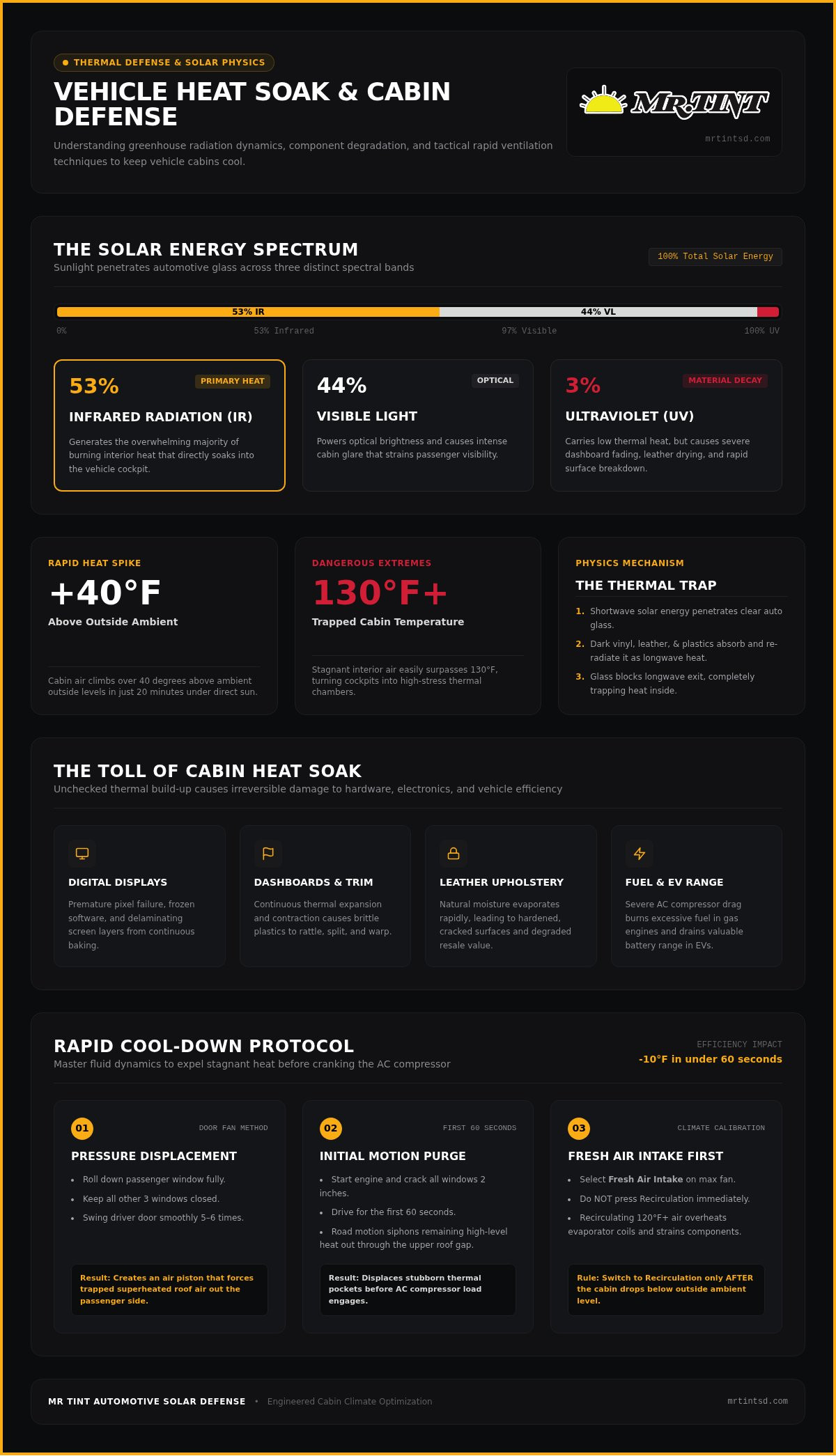
Your vehicle turns into an oven within minutes of parking under the sun. Standard factory automotive glass acts like a thermal valve, letting shortwave solar radiation stream right through the cabin. Once inside, dark vinyl, leather upholstery, and hard plastics absorb that incoming energy. Those materials then radiate it back outward as longwave thermal energy. Standard auto glass blocks longwave heat from exiting, trapping the energy completely. This enclosed heating cycle illustrates the greenhouse effect in real time, driving cabin air temperatures over 40 degrees above ambient outside levels in just twenty minutes.
Cracking a side window barely makes a dent. Without an active barrier, standard clear automotive glass provides almost zero defense against invisible thermal wavelengths. If you want to solve how to keep car cool under relentless sunlight, you have to understand the specific radiation assaulting your cabin.
The Three Components of Solar Energy
Sunlight isn’t just bright glare. It strikes your vehicle across three distinct spectral bands, each impacting your cabin differently:
- Visible Light (44%): Powers optical brightness and causes intense cabin glare.
- Ultraviolet Radiation (3%): Carries low thermal heat, but causes severe dashboard fading, leather drying, and material decay.
- Infrared Radiation (53%): Generates the overwhelming majority of burning interior heat that soaks into your cockpit.
The Toll of Heat Soak on Interiors and Electronics
Extreme thermal build-up destroys interior components fast. Unprotected digital touchscreens and navigation displays suffer from premature pixel failure, frozen software, and delaminating layers when subjected to continuous baking. Factory dashboards expand and contract, causing brittle plastic trims to rattle and split. Premium leather seats lose natural moisture, hardening into cracked surfaces that ruin your vehicle’s resale value.
Beyond cabin damage, extreme heat puts immense mechanical drag on your vehicle. Fighting triple-digit internal heat forces your air conditioning system into overdrive. Traditional gas engines burn excessive fuel idling under high compressor loads, while electric vehicles sacrifice valuable battery driving range just to bring cabin temperatures down to a livable baseline. Learning how to keep car cool starts with stopping infrared transmission before solar rays cook your interior.
Rapid Cool-Down Tactics: How to Flush Heat From a Sweltering Car
Do not crank your air conditioning the second you turn the key. When your parked vehicle sits in direct sun, internal surfaces quickly reach dangerous temperatures, trapping stale air that can easily exceed 130 degrees. Blasting the AC right away simply forces your blower motor to churn that superheated air across hot evaporator coils, straining your cooling components and wasting fuel. Instead, execute an active air exchange sequence before you ever engage the compressor.
Purging that thermal layer manually drops cabin air by roughly 10 degrees in under a minute. Mastering this physical ventilation step is the fastest mechanical shortcut for how to keep car cool when you return to a scorching parking lot.
Executing the Pressure-Differential Door Fan Method
Harness fluid dynamics to displace hot air without waiting for the engine to idle. Follow these exact steps:
- Roll down the passenger window: Lower the front passenger-side glass all the way down, leaving the other three windows shut tight to create a dedicated exit channel.
- Swing the driver door: Walk over to the driver door, grip the handle, and swing it outward and inward five to six times smoothly.
- Expel the headliner heat: This pumping action turns the driver door into an air piston, pulling in outside air while instantly shoving the superheated air pockets trapped against your roof out through the open window.
Optimizing Air Conditioning Controls for Peak Efficiency
Once you clear the stagnant heat, start your vehicle and roll all windows down two inches. Drive for the first sixty seconds. Road motion pulls remaining heated air out through the top gap as cold air begins entering the low cabin area. For proper air control:
Select the fresh air intake setting with maximum fan speed. Do not press recirculation yet. Recirculating air while your cabin is still 120 degrees forces the system to pull in scorching air, making cooling far slower. Point your dashboard vents horizontally toward the back of the car so cooling air flows evenly across the upper interior. Once the cabin air matches the ambient outdoor temperature, hit recirculation. Your air conditioner can now chill already-cooled cabin air, reducing fuel draw and protecting your battery.
While mechanical habits help expel trapped air quickly, stopping heat before it enters the glass gives you permanent climate control. Drivers looking for proactive heat rejection can upgrade their cabin protection with professional auto window tint to keep solar energy out completely.
Everyday Heat Defense: Parking Habits and Interior Barrier Strategies
Everyday parking habits dictate whether your car turns into a sauna by 5 PM. Most commuters pull into spots shielded by morning shadows, completely forgetting that the sun shifts east to west across the sky. By midday, that shady spot disappears, leaving the car exposed to intense, peak solar radiation. The dangers of trapped vehicle heat are severe. On average, 37 children die each year from pediatric vehicular heatstroke in the United States, showing how fast vehicle cabins become lethal environments. Mastering practical routines for how to keep car cool protects both your vehicle components and anyone stepping inside.
Deploy physical layers inside the vehicle. Keep light-colored, breathable seat towels over dark leather to eliminate touch burns on your legs. Use a fabric or slip-on silicone cover over your steering wheel to avoid burned palms. If local security and clear skies allow, crack side windows no more than a quarter-inch to let rising thermal air vent naturally without exposing the vehicle to opportunistic theft.
Smart Parking Tactics in Exposed Outdoor Lots
Position your car to deflect the harshest rays when shaded spots are unavailable:
- Target afternoon building shadows: Park along the eastern or northern walls of large multi-story commercial buildings, where massive shadow lines expand during peak afternoon heat.
- Face away from peak sun: Point your windshield north or away from direct southern exposure if you lack shades, forcing heat against smaller, factory-tinted rear glass.
- Ditch black asphalt: Choose lighter concrete spaces over dark asphalt lots. Fresh asphalt absorbs surface energy and radiates thermal heat straight up into your vehicle floor pan.
Selecting and Storing Windshield Sunshades
Generic cardboard panels sag and leave wide gaps around windshield perimeters. A quality reflective windshield shade can reduce cockpit temperatures by approximately 15 degrees, but you need the right materials and fit. Choose multi-layer reflective metallic foil designs that actively bounce radiant energy away from the dash. Accordion-style or custom roll-up shades engineered specifically for your vehicle model eliminate perimeter gaps where exposed vinyl can still bake. Store these shades flat underneath cargo floor covers or behind seats to keep the reflective inner backing from creasing, peeling, or degrading over time.
These temporary barriers offer helpful protection while parked, but they only defend the cabin when the car is stationary. True round-the-clock defense requires a persistent solution that shields your cabin whether parked under direct sun or cruising down the open highway.
Window Tint vs Temporary Sunshades: Evaluating Total Solar Rejection
Temporary windshield screens only solve part of the equation. Foldable shades protect your front dashboard when parked, but they do nothing for your side glass or rear cabin. Even worse, the moment you pack that screen away and drive down the highway, you lose all solar protection. Traditional dyed window films do not solve the problem either; while dyed tint cuts down visible glare, it absorbs heat directly onto the glass surface, eventually radiating that warmth right back into your lap. If you want a lasting answer for heat rejection window film that actively defends your cabin whether you are idling at a stoplight or parked in an open lot, advanced film technology is essential.
High-performance films turn your glass into a permanent thermal shield. Instead of simply darkening the interior, modern films target the invisible thermal spectrum, providing a superior method for how to keep car cool all year round.
How Ceramic Film Blocks Infrared Thermal Energy
Ceramic tint is engineered with non-conductive, non-metallic ceramic microparticles embedded within microscopic layers. These specialized particles actively scatter and reject solar infrared energy rather than absorbing it. Because ceramic contains no metal alloys, it delivers exceptional solar rejection without disrupting your cellular data, navigation satellites, keyless entry, or radio signals. Drivers get pristine optical clarity, up to 99% ultraviolet defense, and a dramatic drop in radiant cabin heat.
Clear Solar Defense: The AIR 80 Advantage
Many vehicle owners want heavy thermal protection without dark or heavily shaded glass. That is where clear technology takes over:
- Factory-Clear Appearance: AIR 80 clear solar film provides substantial infrared and UV rejection while preserving the factory clear look of your automotive glass.
- Front Windshield Defense: Because large windshields represent the greatest surface area for solar heat intrusion, installing AIR 80 creates an invisible thermal barrier right where thermal energy hits hardest.
- Regulatory Compliance: It maintains full optical transparency, ensuring complete visibility and alignment with automotive glass standards across states requiring higher visible light transmission.
Do not settle for temporary fixes that only work half the time. Stop solar heat at the glass line by scheduling an upgrade with our certified installation team at Mr Tint today.
Professional Automotive Window Tinting: Upgrading Cabin Climate with Mr Tint
Temporary tactics and parking habits manage heat symptoms, but professional installation fixes the root problem. Precision-installed window films create an active, permanent thermal boundary across your glass. Learn more about your options by reviewing our comprehensive guide to san diego auto window tinting. By filtering raw solar radiation before it penetrates your vehicle, high-grade films lower internal cabin temperatures and protect your interior materials from continuous ultraviolet decay.
Every vehicle requires customized care. Hand-cutting film against automotive glass risks etched trim and imperfect borders. Professional shops use computer-guided plotting software to precision-cut film patterns for exact glass dimensions. This delivers clean, micro-edge alignment with zero bubbles or peeling. When seeking the most effective solution for how to keep car cool during blistering summer months, choosing factory-backed materials backed by a 100% film and labor warranty ensures complete peace of mind.
Selecting the Ideal Automotive Film Package
Different driving habits and vehicle profiles demand specialized solar defense materials:
- Classic series dyed film: Delivers sharp outward aesthetics, reduces visible glare, and adds baseline privacy.
- Comfort series metal film: Reflects incoming light using metallic layers to improve general cockpit heat rejection.
- Ceramic tint: Blocks high volumes of solar energy without metal interference, maintaining crystal-clear electronics performance.
- IR ceramic film: Delivers high-level defense against intense infrared heat waves, ideal for prolonged desert or inland commuting.
- EV-optimized installations: Reduces reliance on max air conditioning, preserving essential battery mileage for hybrid and electric vehicle platforms.
Precision Installation Across San Diego County
Inland valleys like Escondido and San Marcos regularly see triple-digit conditions, while coastal corridors from Oceanside to Carlsbad face intense reflected marine glare. Untreated factory windows cannot handle this constant exposure. Certified digital cutting technology maps every contour of your vehicle side windows, rear glass, and windshield, eliminating hand-blade hazards entirely.
Mr Tint serves drivers throughout Vista, Carlsbad, Oceanside, Escondido, Encinitas, and San Marcos with advanced automotive protection. Do not endure another season of scorched seats, overheated touchscreens, and strained air conditioning compressors. Discover the ultimate answer for how to keep car cool on every commute. Shield your vehicle cabin today by scheduling your appointment directly with Mr Tint.
Take Control of Your Vehicle Climate Today
Relying on cracked windows and folding shades only buys you limited time. True thermal defense stops solar radiation before it penetrates your vehicle glass. Pairing fast cabin air flushing habits with high-performance window films delivers the ultimate solution for how to keep car cool throughout scorching summer heat waves. You protect valuable interior electronics, eliminate burning upholstery, and take painful strain off your vehicle air conditioner.
Demand lasting comfort for every mile ahead. Mr Tint equips your vehicle with computer-cut film patterns tailored to your exact make and model for flawless edge fitment. As an authorized installer of ceramic, IR ceramic, and AIR 80 solar control films, our certified team backs every project with an ironclad 100% film and labor warranty. Beat the inland sun, shield your passengers, and transform your driving experience before the next heat wave strikes. Upgrade Your Cabin Comfort with Mr Tint Today!
Frequently Asked Questions
How much cooler does a car stay with ceramic window tint installed?
Ceramic window tint can drop interior cabin temperatures significantly by rejecting up to 98% of infrared heat waves. Instead of baking in trapped solar radiation, your seats and dashboard remain closer to ambient outdoor levels. Drivers across San Diego and inland regions like Escondido notice the vehicle air conditioner cools the cockpit in a fraction of the usual time.
Does cracking the windows actually keep a parked car cooler?
Cracking side windows a quarter-inch provides minor convective airflow, but it does not stop raw infrared radiation from penetrating the glass. Direct sunlight continues heating your dashboard, seats, and floorboards regardless of tiny window gaps. While it vents a fraction of standing hot air, cracking glass offers minimal thermal relief and creates vehicle security vulnerabilities.
Why does my car feel so hot even with the air conditioning running?
Your vehicle feels hot because untreated automotive glass lets infrared radiation shine directly onto your skin and cabin surfaces while driving. Even as your vents pump cold air, the radiant heat from sunlight counteracts the cooling effect. Equipping your vehicle with advanced solar control films stops this constant thermal penetration so your air conditioning can finally maintain balanced comfort.
Will clear heat rejection window film like AIR 80 block heat without darkening glass?
Yes, clear solar control films like AIR 80 block substantial infrared heat and 99% of ultraviolet rays without darkening the glass. This technology provides an exceptional answer for drivers researching how to keep car cool while preserving complete optical clarity. It is specifically beneficial for front windshields and side windows where state laws demand high visible light transmission.
Can interior dashboard covers prevent cabin temperatures from rising?
Dashboard covers protect dash materials from direct UV cracking, but they do not stop overall cabin temperatures from climbing. Solar thermal energy still enters through the glass and gets trapped inside the vehicle. Fabric covers simply absorb heat instead of the plastic below them, meaning overall interior air temperatures remain dangerously high without dedicated glass-level rejection.
How fast does a vehicle interior heat up on an 80-degree day?
A vehicle interior heats up rapidly, climbing approximately 20 degrees within the first ten minutes on an 80-degree day. Within twenty to thirty minutes, the internal air can easily exceed 114 to 120 degrees due to the solar greenhouse trap. Surface temperatures on dark steering wheels, dashboard trim, and child safety seats rise even faster, often reaching skin-damaging levels.
What is the fastest way to cool down hot leather car seats?
The fastest way to cool scorching leather seats is to wipe them down with a damp microfiber towel before sitting. The evaporating moisture rapidly pulls surface heat directly out of the upholstery. Moving forward, understanding how to keep car cool requires stopping that radiant energy in advance by shielding side windows with IR ceramic tint or covering seats with breathable cotton towels while parked.